The Farm
Five old family farms, one house lot, and six years of growing for food, beauty, and habitat, on three-quarters of an acre near downtown Camden, Maine.
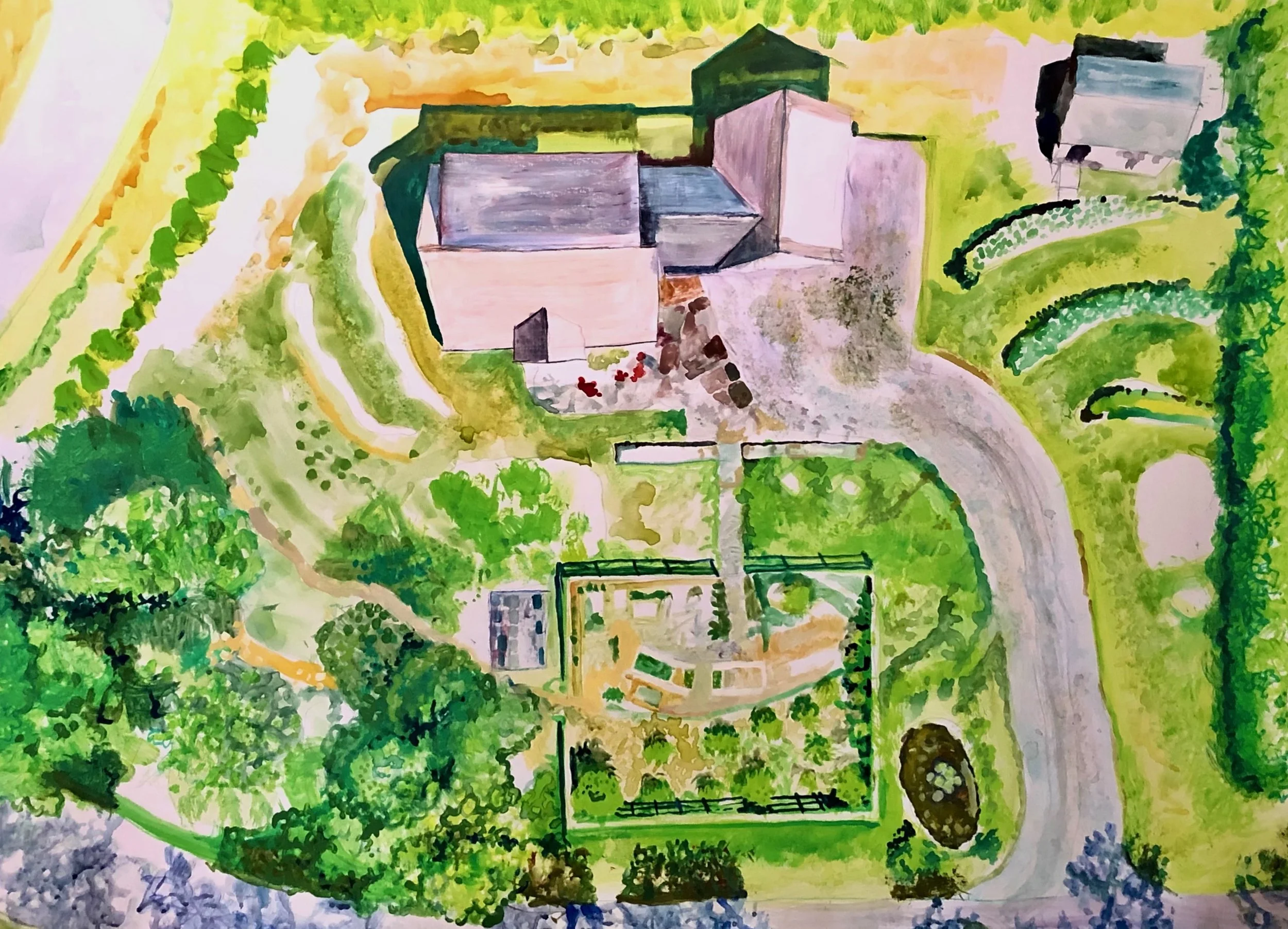
Watercolor by David Miller
Before Old Souls
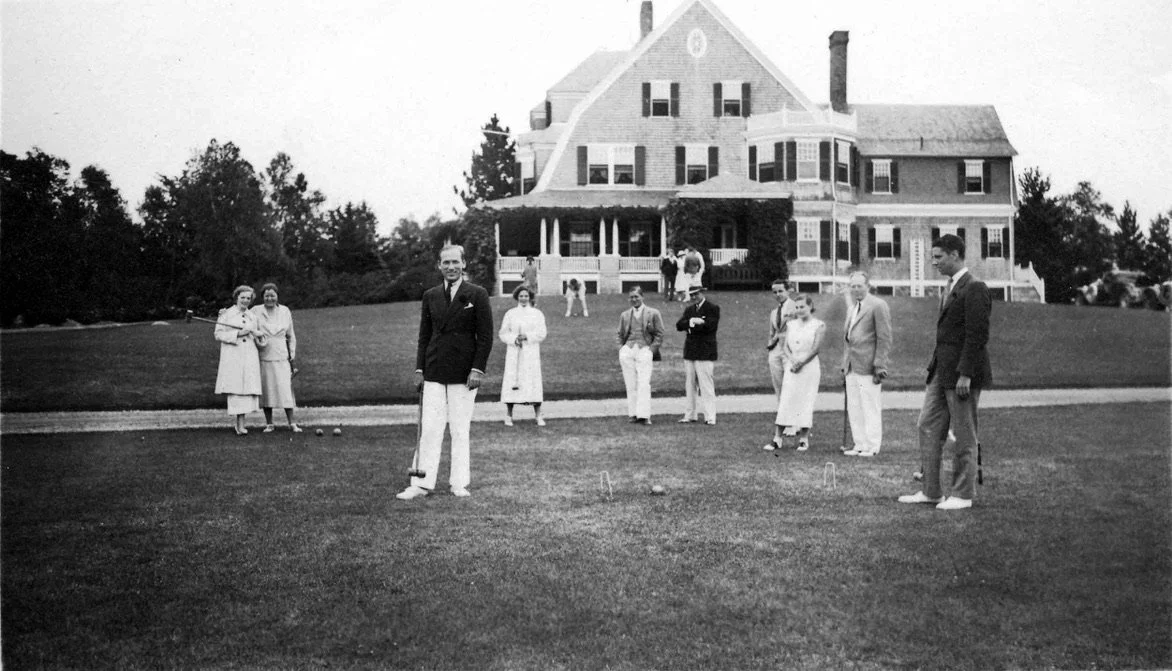
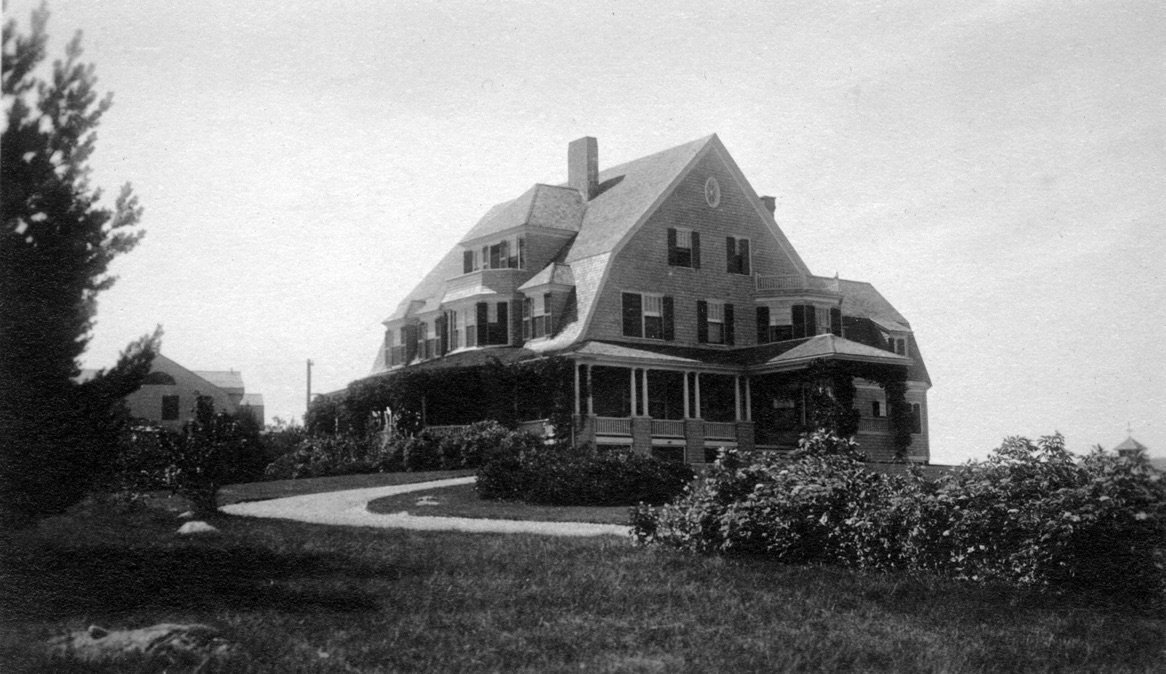
As it turned out, the lot I bought in 2018 had once been farmland. In the 18th and much of the 19th century, five family farms of eight to ten acres each covered this ground and fed the people of Camden, at a time when there were few roads and most goods came and went by sailing vessel. Once better roads, steamers, and the railroad to Rockland arrived after the Civil War, Camden could import its food from far away, and local farmland lost its value. By the 1890s the five farms had been joined into a private estate by Parker Morse Hooper. His daughter sold it to a developer in 1930, and long story short, I bought one of the last remaining lots in the subdivision. I named the place Old Souls in honor of those farms.
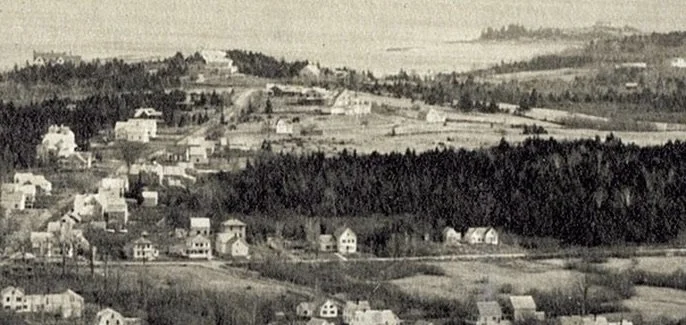
Camden before the subdivision: Hill Acres, the Hooper mansion, stands at the upper center of the photo, Old Souls just below to the right, Carriage House left. The cleared area around these buildings made up the five farms Hooper purchased in the 1890s. Chestnut St. is clearly visible running uphill on the left, and Limerock St. along the very bottom of the photo. Below the Hoopers playing croquet and another view of the estate.
Where I Started
When I bought my three-quarters of an acre in Camden in 2018, I had a sunny, west-facing slope, three big oaks, two ash, and two multi-trunked maples worth keeping, a thousand crowded little willows, and soil that turned out to be almost nothing but gravelly dirt. The topsoil had been scraped away years before, probably to finish other lots in the subdivision. My soil test came back in July 2020 with 2.5 percent organic matter, half or less of the healthy range of 5 to 8 percent. I cleared most of the brush and willows by hand, with clippers, a chainsaw, and a lawn mower, slowly over a year’s time.
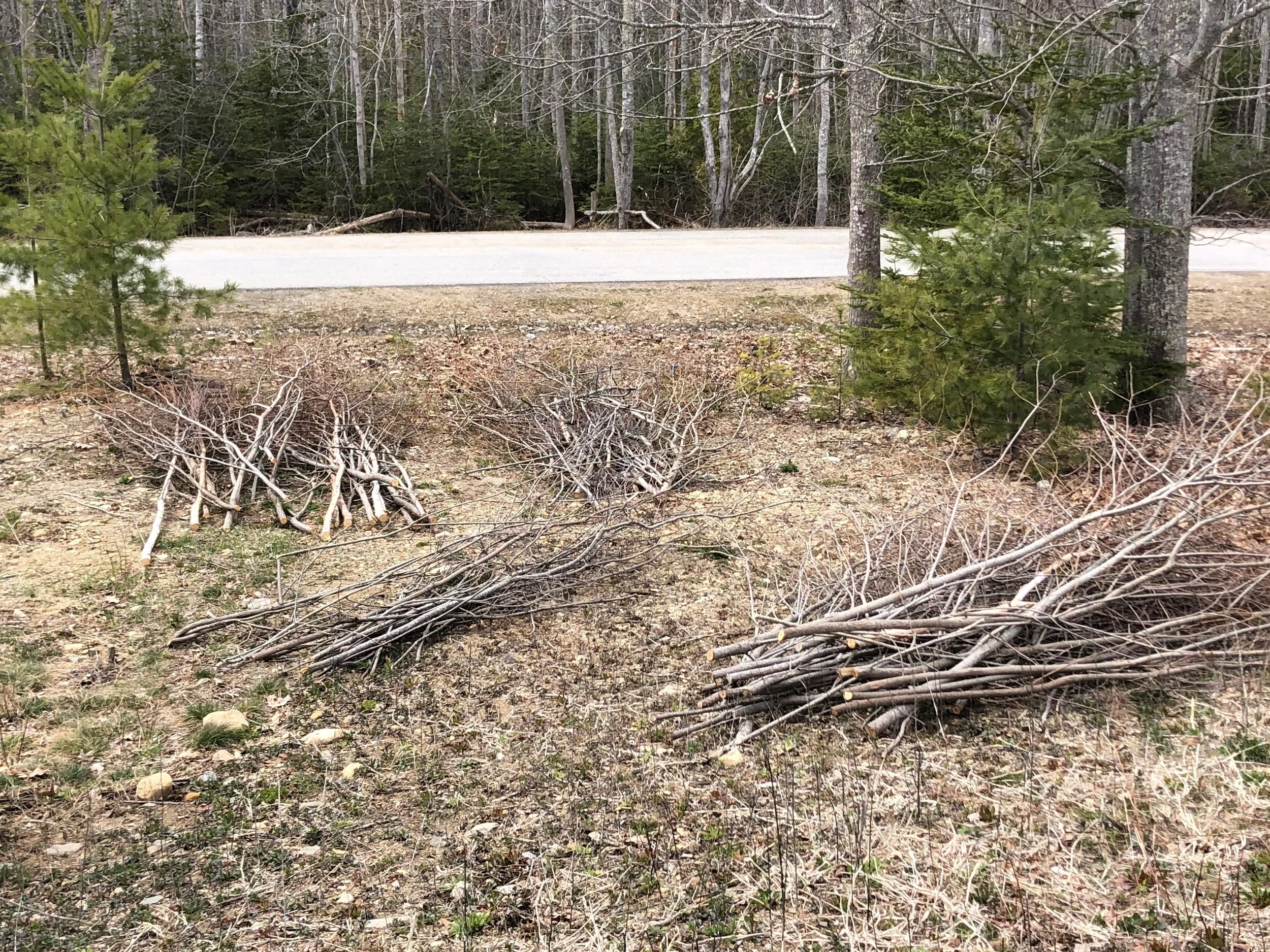
Willows and brush cleared by hand, April 2020.
The Nine Zones
Over six years the lot became nine named areas, each with its own conditions, plantings, and purpose. You can walk a visitor from one to the next.
Garden Orchard: raised beds, the greenhouse, and fruit trees inside a fenced square in front of the house.
South Orchard: fruit trees on the slope beside the driveway, where three swales spread the rain.
The Pond: dug in 2020 where the ground always stayed wet; the property’s most important habitat.
Woodlands: an in-between place of natives, pines, and lupine, still changing.
North Orchard: the South Orchard’s mirror on the other side of the house.
Faux Meadow: former lawn, now native flowers and grasses, planted in June 2021.
Sanctuary Forest: a shady corner with a granite bench for sitting still and watching.
Oak Shade Garden: shade plantings beneath the oaks that were rescued.
Chicken Coop and Run: home to the hens and the egg-share.
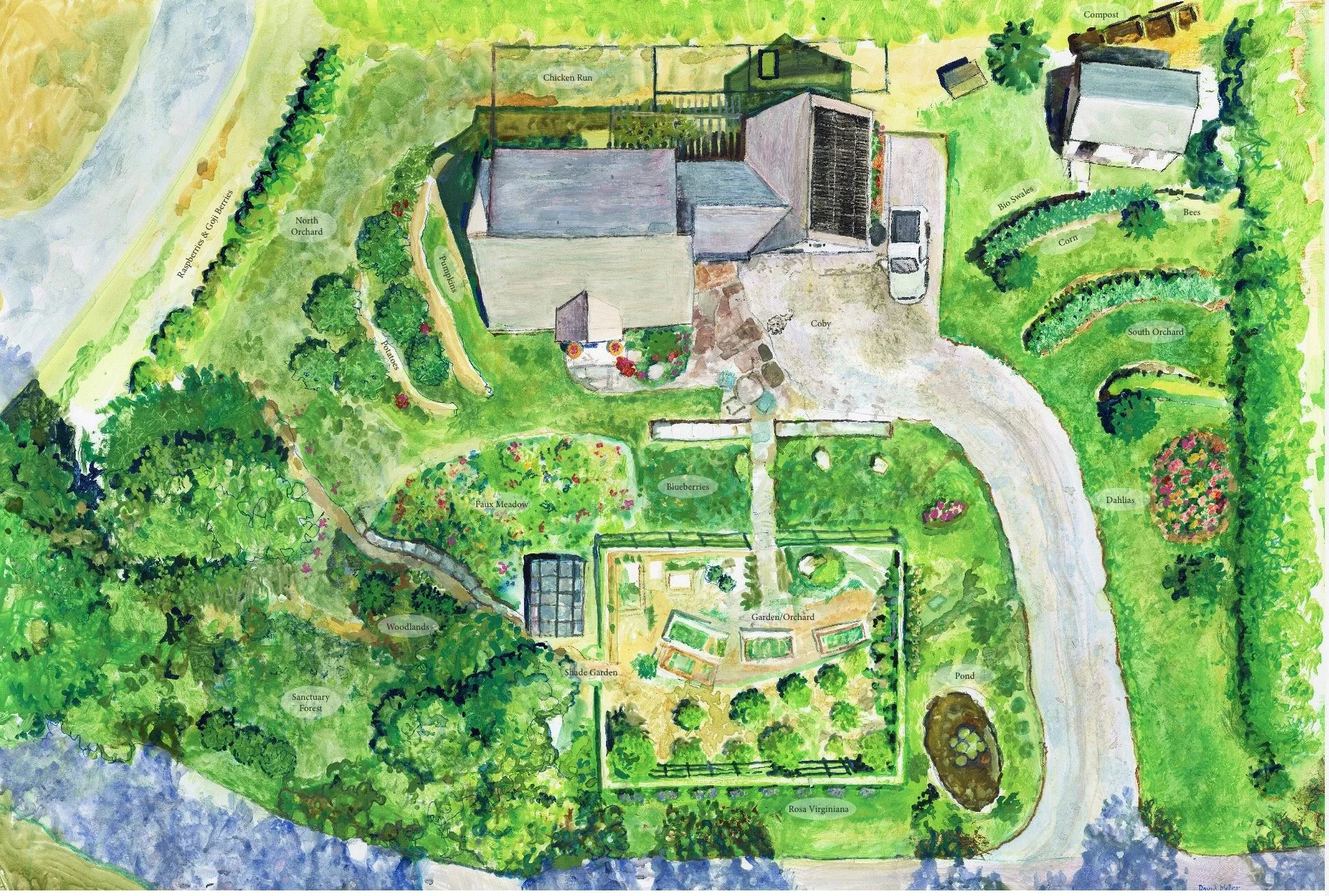
Watercolor map with nine zones by David Miller, 2025.
Six Years On
Six years later, the soil in the amended planting beds tests at 6.3 percent organic matter, up from 2.5 percent. More than 150 kinds of plants grow here, about 70 of them native. The farm-garden feeds my household and six neighboring families through the egg-share and the harvest. It has been a Certified Wildlife Habitat since the fall of 2020, and frogs, a great blue heron, owls, field sparrows, and monarchs have all found their way here. Each year more visitors come to see it, on garden club tours, on the Rockport-Camden Food Garden Tour, or just walking by on Linden Lane. Please consider yourself invited for a tour, too! Get in touch to be added to our mailing list.
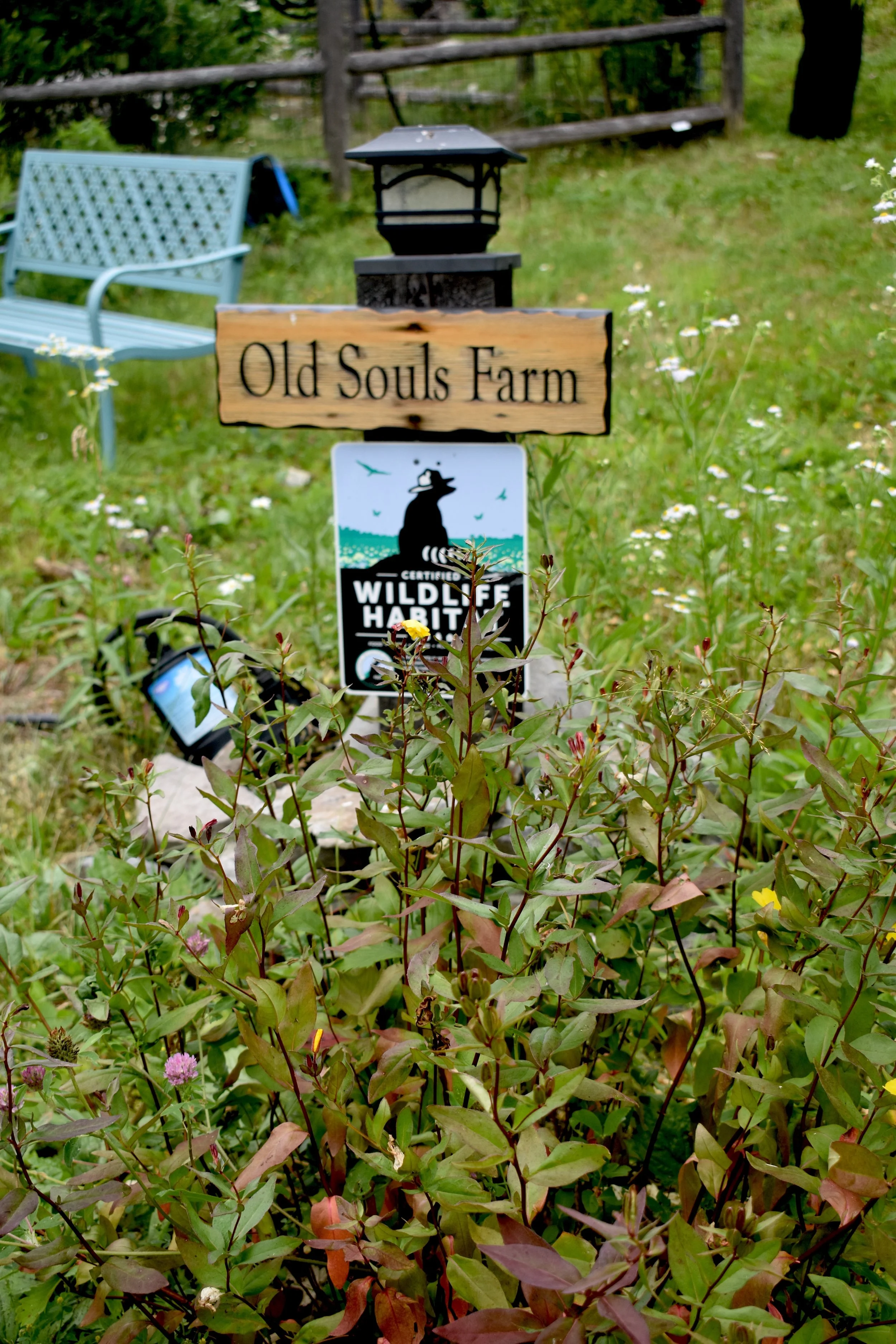
Old Souls Farm Sign and the Wildlife Habitat Marker, July 2025