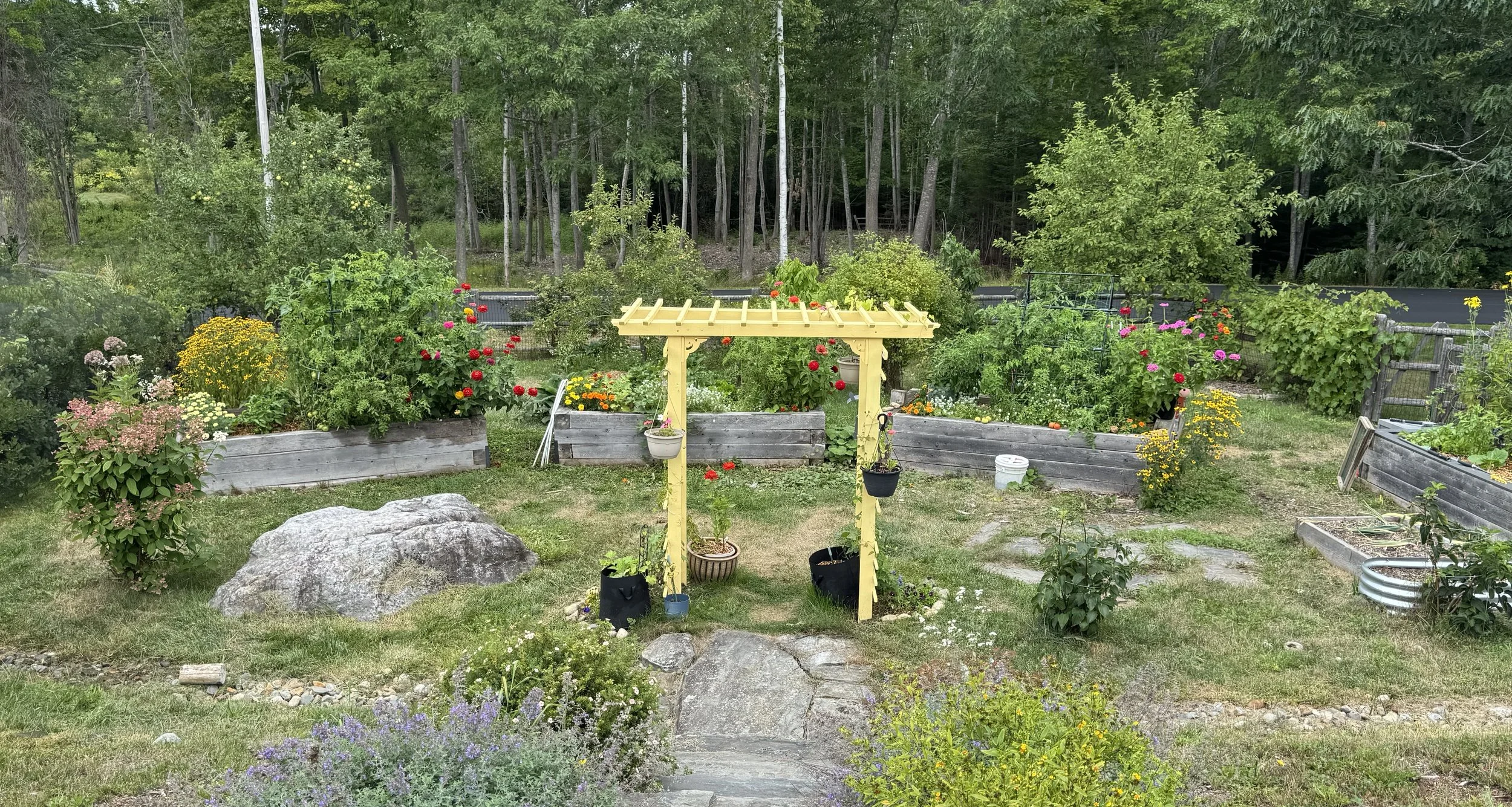
A Residential Farm-Garden in Camden, Maine
Old Souls microFarm
A Working Model for Food, Beauty, and Habitat — On Less Than One Acre
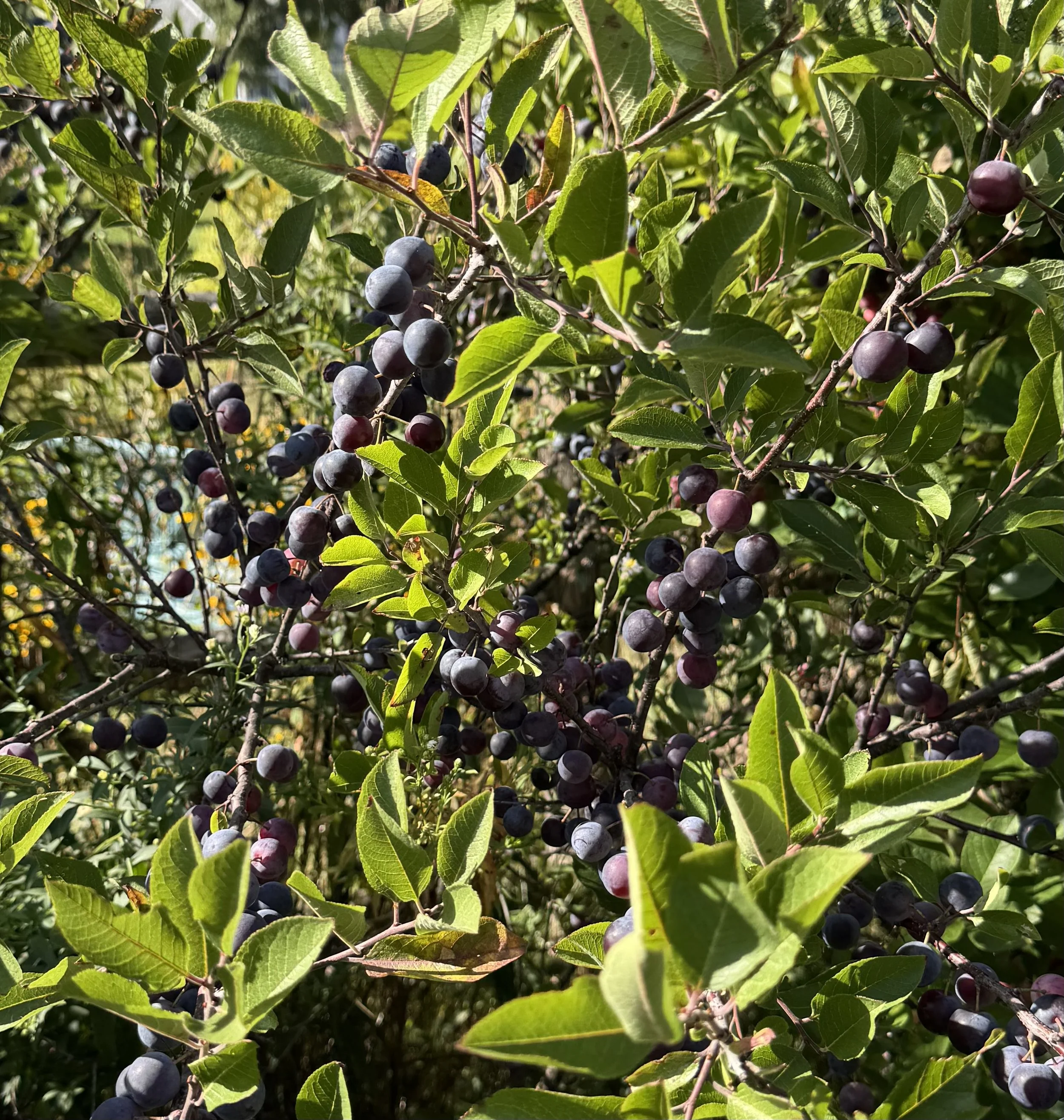
Old Souls microFarm is a 0.74-acre residential property in Camden, Maine, where six years of hands-on work have turned an ordinary house lot into something else entirely: a living demonstration that food production, native-plant habitat, and everyday landscape beauty can all grow in the same small space, at the same time.
This isn't a hobby garden, and it isn't a commercial farm. It's a residential farm-garden — a deliberately designed, replicable model for what an ordinary homeowner can do with the lawn and landscaping most of us already have.
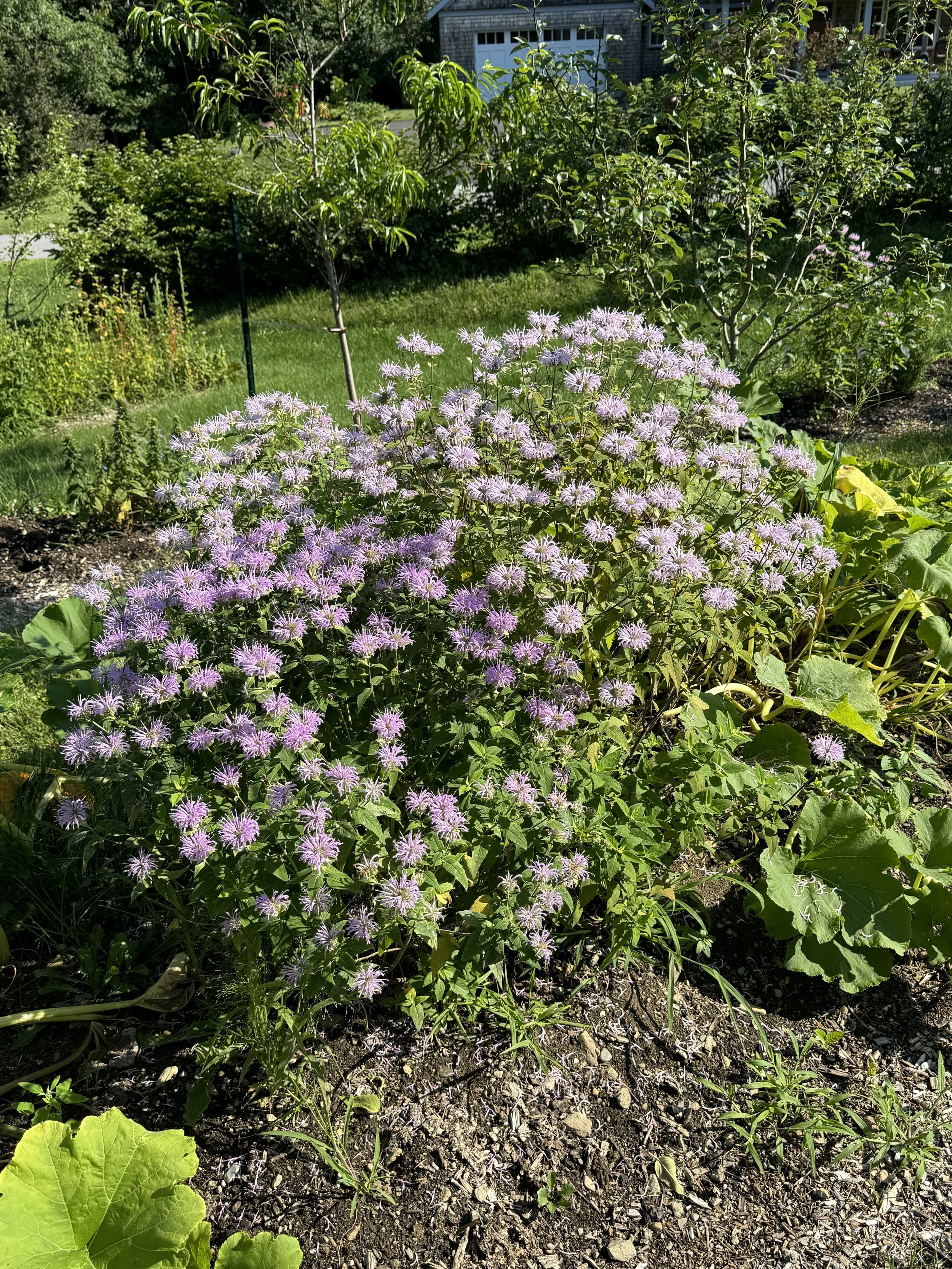
What that looks like in practice
Old Souls started in 2018 with bare, gravelly soil — tested at just 0.3% organic matter, against a healthy range of 5–8%. Since then, the property has grown into nine distinct, named areas: orchards, a designed native meadow, a wildlife pond fed by a hand-built water-management system, woodland and forest zones, raised beds, and a greenhouse — all documented along the way through photographs and journal entries, and verified in 2025 through a full property-wide plant inventory of 149 species, split almost evenly between native and non-native plantings.
Why a Residential Farm-Garden, and Why Now
Most of us don't think of our yards as part of the food system, or as habitat. They're just lawn. But that assumption is worth a second look.
The food system most of us rely on is more fragile than it looks. Producing the synthetic fertilizer that feeds roughly half the world's crops is a fossil-fuel-intensive process responsible for close to 2% of global carbon emissions on its own. The average American meal travels something like 1,500 miles from farm to plate. And the distribution network behind your grocery store is more brittle than it appears — recalled food units in the U.S. jumped over 200% in a single recent year, a sign of how much can go wrong when production and processing are concentrated in just a few places.
At the same time, climate change is actively shrinking the farmland we depend on. Drought, wildfire, and flooding are no longer occasional disruptions to agriculture — they're a growing, structural feature of it.
And most residential land is doing almost nothing to help. The vast majority of American yards are planted in turf grass and ornamental exotics — beautiful to some eyes, perhaps, but offering next to no food value and very little habitat for the birds, pollinators, and other wildlife native landscapes depend on.
Old Souls exists to test a different idea: that residential land — land already in human hands, already watered and cared for — can become a real, if small, source of food security and biodiversity. Not instead of commercial agriculture, but alongside it. One yard, one lawn, one homeowner at a time.